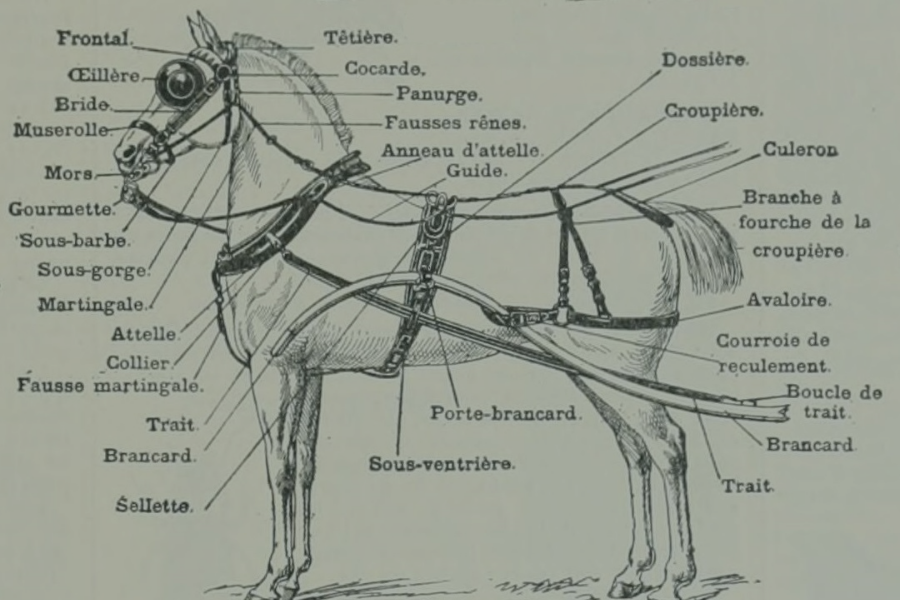
One of this year’s words moving quickly through the AI vocabulary is harness.
Sequoia Capital has used it to describe the scaffolding around models that helps agents carry out longer-horizon work. OpenAI now writes explicitly about harness engineering and the execution environment surrounding the model. More recently, The Economist described the harness as the system surrounding an LLM that keeps agents ‘on the straight and narrow,’ placing it within a broader emerging trust layer for agentic AI. Behind the vocabulary is a real shift in how the industry thinks about AI systems. The model is no longer the whole system. What surrounds it increasingly determines whether its capability turns into useful, reliable work.
From an enterprise operations perspective, however, the most important question is not whether an AI system has a harness. It is whether that harness can scale across the organization. Enterprises will not use AI for one application or one narrowly defined class of work. They will use it for research, financial analysis, procurement, project execution, compliance, marketing, customer operations, claims processing, planning, and many other forms of knowledge work. Each of those workflows carries its own objective, requirements, evidence standards, authorities, tolerances, and escalation procedures. Those requirements will also change as the business changes. A control architecture that must be substantially re-engineered whenever the work changes simply relocates the scaling problem.
We approached this differently when we built Assiduity. We treated reliable AI execution as an operating-control problem. The principle is familiar to anyone who has spent time in operations, project management, quality, or risk. An organization defines what the work is supposed to accomplish. It establishes the conditions under which that work is considered acceptable. It measures execution against those conditions while the work is underway. When execution begins moving outside the accepted range, the control system responds. Applying that discipline to generative AI required solving a harder problem because machine execution is probabilistic, semantic, and capable of drifting while still producing output that looks entirely plausible.
Assiduity is our answer to that problem.
We built what an enterprise harness has to become: a general-purpose control architecture for machine execution.
The exclusion problem does not scale
The Economist’s barbed-wire metaphor is apt for hard boundaries. Security, permissions, privacy, and absolute regulatory prohibitions need fences. But much of enterprise knowledge work can fail entirely inside the fence.
Much of AI governance starts with prohibitions. The system should not disclose certain information, take unauthorized actions, make certain claims, or breach specified policies. Those controls are necessary wherever the boundary is absolute, particularly in security, privacy, or regulatory compliance. They are much weaker as the primary means of governing complex knowledge work because the ways such work can go wrong far outnumber the failures anyone can anticipate in advance.
An analysis can leave out a material fact without breaking any rule. A recommendation can drift toward the wrong objective while remaining factually defensible. A project plan can satisfy every formatting requirement and still miss a critical dependency. A report can rely on approved evidence while giving that evidence the wrong weight. None of this looks dramatic. The output is often fluent and polished enough to pass a quick read. The problem is subtler than a broken rule: the work has quietly stopped doing what the organization asked of it, even as it continues to look correct.
We call this the exclusion problem. When control depends on naming everything the system must not do, the control surface grows with the complexity of the work itself. Each new workflow brings new ways to fail. Each new policy introduces its own exceptions. Each new application adds another set of edge cases for someone to anticipate, build, test, and maintain. That may be workable inside a tightly scoped application. It is a poor operating model for an enterprise trying to hand thousands of different kinds of work to AI.
Assiduity was built by inverting the exclusion problem.
Instead of trying to enumerate every undesirable path, we start by defining the intended execution. The organization describes what the work is for, along with its scope, constraints, evidence requirements, exclusions, escalation conditions, and what finished looks like. Together these form the operating mandate. Assiduity translates that mandate into a semantic contract, making organizational intent computationally usable during generation.
This changes the governing question. Control no longer depends primarily on whether the system tripped one of the failures someone thought to prohibit in advance. Assiduity can evaluate whether the developing work still aligns with what the organization set out to accomplish. Absolute prohibitions keep their place because a semantic contract does not replace security boundaries or regulatory restrictions. It addresses the much larger space of work that can go wrong without ever becoming obviously forbidden.
That inversion is what makes the approach scalable.
The organization no longer has to model the entire universe of failure. It has to define the work.
A harness needs a reference state
Once intended execution can be represented, deviation from that intent can be measured. The semantic contract gives Assiduity a reference state for the work, allowing the developing output to be evaluated according to its relationship to that mandate. In control terms, this creates an error term: a measure of the deviation between the intended execution and the execution taking shape.
That matters because enterprise work rarely moves from correct to obviously wrong in a single step. Drift develops gradually. The system may begin emphasizing the wrong issue, lose an important requirement, overvalue a secondary consideration, or allow an early omission to shape what follows. Once deviation can be measured, control does not have to wait for a clear-cut failure. The system can respond to where the work is heading while there is still room to change it.
The Economist offered a useful example. An agent-generated chart of the income of Europe’s top tennis players mistakenly omitted Carlos Alcaraz. The presenter joked that in tennis it hardly mattered; if it had been a company financial analysis, it would have. That is much closer to the everyday enterprise problem than the more sensational stories about rogue agents: the system can stay within its permissions, use legitimate information, produce credible work, and still omit something material enough to change the answer.
A stronger perimeter does not reliably catch that type of failure. Neither does a longer catalogue of prohibited behaviors. The system needs a way to recognize that the execution itself is departing from what it was supposed to accomplish.
In controlled testing across multiple model families and document types, this generation-time measurement caught and corrected meaningful deviation from the intended work — consistently, and without degrading the quality or fluency of the output.
Execution is a trajectory
The need for that control grows as agents take on longer sequences of work. What the system does early changes the context for everything that follows. An omission can narrow the evidence considered later. A shift in emphasis can redirect attention. A small deviation can reshape downstream reasoning, which then influences the next action. Minor errors can compound without any single step looking catastrophic on its own.
Judging only the finished output tells the organization whether it likes the result, but it provides much less control over the process that produced it. Even individual checkpoints are limited if they are treated as isolated events. The relevant question is whether the developing trajectory remains consistent with the operating mandate.
Assiduity measures deviation as generation unfolds. The error term persists across the developing execution rather than resetting at every step. When the work begins moving outside an acceptable relationship to the mandate, the control mechanism can influence the path before generation finishes, while alternative continuations are still available.
This is what we mean by generation-time control. Assiduity is not simply evaluating the finished artifact after the fact. It is controlling the developing path of machine execution while the work is still being produced. Because the steps are connected, the error signal has to be connected through time as well.
A mature operating system looks for variance while correction is still possible. Waiting until the work is complete may reveal that something went wrong, but by then the error may already have propagated through the process that produced the result. Generative AI should be governed with the same discipline.
Risk tolerance belongs to the organization
Once deviation can be measured, the next question is operational:
how much deviation is acceptable for this work?
There is no universal answer. An early brainstorming exercise can absorb far more variation than a financial recommendation or a regulated decision. A low-stakes drafting task may warrant relatively little intervention, while work carrying material financial, legal, safety, or reputational consequences calls for tighter control and earlier escalation. The appropriate tolerance follows from the risk of the work, not from a generic definition of what a reliable AI system should be.
For each workflow, the organization defines how much deviation it is prepared to tolerate. As deviation rises, Assiduity can allocate additional generation-time effort to finding a continuation that brings execution back within the accepted range. If the system cannot restore the path within that tolerance, the workflow can escalate rather than allowing unresolved deviation to continue accumulating.
This puts an important governance decision back where it belongs. The enterprise determines the level of execution risk it is willing to accept based on the consequences of the work, its governance obligations, and its own risk appetite. That is already how mature organizations operate. They set requirements, define acceptable variance, apply more control to higher-risk processes, and escalate when execution moves beyond what they are prepared to accept.
As AI shifts from assisting with work to carrying out more of it, those principles become more important because the organization is delegating execution without delegating responsibility for the outcome.
The enterprise harness has to generalize
A useful enterprise harness cannot be judged only on whether it makes one agent reliable inside one application. It has to survive the changes around it. The organization may switch models, add workflows, revise policies, or discover that one function requires far stricter control than another. A process that was once low consequence may become material enough to demand a tighter tolerance. None of those changes should force the enterprise to reinvent its underlying theory of control.
Assiduity separates the control mechanism from the work being controlled. The model remains the generative engine. The operating mandate changes with each workflow to express what acceptable execution means in that context. The semantic contract makes that mandate usable by the control system. Assiduity measures how the developing execution relates to it, while the enterprise determines the tolerance appropriate to the risk.
When the work changes, the mandate changes with it.
The control architecture stays put.
That property is what turns a harness from an application-level solution into enterprise infrastructure. A general enterprise harness cannot get its scalability from knowing every application in advance. It has to get it from a reusable way to represent intended execution, measure departure from it through time, and respond according to the organization’s tolerance for risk. This is the difference between designing a reliable application and designing a reusable control system.
We built the enterprise AI harness
The industry is right to focus on harnesses. Better models will expand what machines can do, but capability alone will not determine how much consequential work enterprises are willing to delegate. Organizations need a way to define the work, control how it is executed, and determine the amount of deviation they are prepared to accept.
That control mechanism also must survive change. Models will change. Workflows will change. Policies will change. Risk will vary across the organization. Rebuilding the control system every time one of those things changes is not an enterprise architecture. Barbed wire protects the boundary. Enterprise control also must preserve direction.
Assiduity was built for the more general problem. The mandate changes with the work. The control architecture remains.
We did not build a harness for one application. We built the enterprise AI harness.